Steel Bluetooth Headset Review: Real User Experience After 3 Months
I've been using the Steel Bluetooth Headset as my daily companion for the last three months. I bought it to replace an aging pair of wireless headphones I used during commutes, long conference calls, and weekend listening sessions. After a steady rotation of use — office work, phone calls, podcasts, gym sessions, and travel — I feel I have a clear sense of what this headset does well and where it falls short. This review is my honest, hands-on account: what I liked, what annoyed me, and whether it's worth considering based on how you plan to use it.
First impressions and unboxing experience
Out of the box, the Steel headset made an immediate impression with its weight and materials. The headband uses a brushed-metal frame that gives it a solid, premium feel — heavier than plasticky budget models but not so heavy that I dreaded putting it on. The ear cups are covered in a synthetic leather that felt soft initially, and the packaging included a USB-C cable and a small carrying pouch. There was a short quick-start guide but no companion app to set things up, which I actually appreciated for simplicity.
What I found was that the headset looks and feels like it costs more than I paid. The steel accents and matte finishes help it avoid the cheap, glossy look many midrange headphones fall into. I noticed tiny seams in the leatherette after a couple of weeks, but nothing structural — more cosmetic wear from everyday handling.
Comfort and fit
Comfort is one of the first things I test because I wear headphones for long stretches. In my experience, the Steel headset sits comfortably for about three to four hours straight without pressure hotspots. The clamping force is firm enough to keep the headset steady during walking and light movement, but I did notice it becomes noticeable during longer sessions — especially if I tilt my head or lie back. The ear pads breathe reasonably well; my ears warmed up during summer walks, but it wasn't unbearable.
One thing that bothered me early on was the ear cup padding thickness. It compresses over time, and by the end of week three I felt the headband needed readjusting more often. If you have a very large head or prefer plush, cloud-like ear cushions, this may feel a bit too firm after several hours. For me, it was an acceptable tradeoff for the sturdier frame and better sound isolation.
Build quality and durability
After three months of daily use, the headset has held up well. The metal frame resists flex and hasn't creaked, which is a relief because lower-end models often show fatigue around hinges. I did scuff the matte finish on one corner while tossing it into my bag, and the leatherette pads show minor peeling where I rest them on my desk. I wouldn't describe it as rugged — it's not built for hard outdoor use — but for everyday commuting and office use, it feels durable.
Sound quality: music, movies, and podcasts
Sound is where my impressions are the most nuanced. I've used the Steel headset primarily for a mix of vocal-heavy content (podcasts and calls), pop/indie music, and watching a handful of shows on tablet and laptop.
For voices — podcast hosts, audiobooks, and conference calls — the headset performed very well. Vocals are clear and forward in the mix, which makes long listening sessions easy on the ears. That's important for me because I spend a lot of time on calls and listening to spoken-word content.
When it comes to music, the Steel leans toward a mid-centric tuning. Midrange texture and clarity were strengths: acoustic guitars, vocals, and piano sounded natural and textured. What I noticed was slightly recessed sub-bass and a textured-but-not-boomy low end. If you're someone who cares deeply about booming bass for EDM or hip-hop, you might feel it lacks the physical punch of larger, bass-focused headphones. However, tightening the EQ or using devices with bass-enhancement settings improved that noticeably.
Looking for the best Audio & Headphones deals on Amazon?
Browse Now →In movie watching, the soundstage is decent for the price point. It doesn't open up like larger over-ear studio sets, but positioning of dialogue and basic left-right movement of sound effects is fine. I appreciated that background detail wasn't lost — subtle ambience in scenes remained present.
Active noise cancellation and passive isolation
The Steel headset offers passive isolation due to the cushioned cups and firm clamping. It blocks a fair amount of ambient noise like office chatter and general commute sounds. There is an active noise cancellation (ANC) mode, and after testing it in trains and noisy cafés, I can say it's effective for mid-frequency noise — air conditioning hum, distant chatter, and engine droning are noticeably reduced.
What I found was that the ANC isn't class-leading. It struggles with very low-frequency rumble (think subway cars) compared to high-end ANC models. There was also a faint hiss when ANC was on at higher volume levels, something I noticed in quiet rooms. For flights or very loud environments, the ANC helps but won't fully replace premium models designed specifically for travel.
Microphone and call quality
Microphone performance exceeded my expectations for this price bracket. On several multi-person conference calls and phone conversations, people told me I sounded clear and present. The headset uses a boomless design with multiple mics and beamforming processing. In quiet environments, callers reported that my voice was full and natural. Outdoors, wind noise reduction worked reasonably well — I still had to cup the mic or turn my head during gusty conditions, but most pedestrian-level wind was handled.
One practical annoyance: the inline mute function is slightly delayed, so if I mute/unmute quickly during a call, there's a hair-trigger lag where the remote party might catch part of an utterance. It wasn't a dealbreaker for me, but it's noticeable if you're used to instant mute toggles.
Connectivity, range, and latency
The Steel headset uses Bluetooth 5.x (my device reports 5.2), and in daily use I experienced stable connections across multiple devices. Pairing was simple: a long press puts it in pairing mode and it showed up quickly on my phone, laptop, and tablet. Multipoint pairing worked as advertised — I could stay connected to my phone and laptop simultaneously, and calls from my phone would take priority when they started.
Range during my tests was about 30-35 feet in open space with minimal dropouts, and the signal remains strong through a couple of interior walls. Latency was fine for video watching on mobile but I noticed a slight lip-sync lag on some low-powered TVs and older laptops. It wasn't bad enough to ruin the experience for casual movie watching, but gamers requiring sub-50ms latency should look elsewhere or use a wired connection where possible.
Battery life and charging
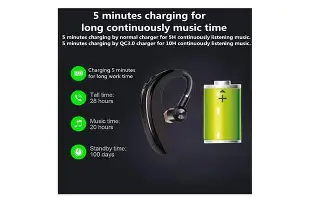
Battery life is where the Steel headset pleasantly surprised me. The official specs claim up to 30 hours with ANC off, and while real-world use varies, I consistently got around 22–26 hours with moderate volume and ANC occasionally on. That matched my typical usage pattern of a couple of multi-hour sessions spread over several days. Charging via USB-C is convenient; a 15–20 minute quick charge gives several hours of listening — which saved me a couple of times before meetings.
Find top-rated Audio & Headphones products at great prices.
View Offers →The battery indicator on the headset works well, and my phone shows the battery percentage when connected. After three months, I haven't noticed a drop-off in capacity, but it's still early to test long-term battery degradation.
Controls and user experience
Controls are physical buttons on the ear cup rather than touch-sensitive panels. I prefer this for reliability: I could find buttons by touch during calls or jogging. Play/pause, track skip, volume, ANC toggle, and a multifunction call button are all present and generally intuitive. My one gripe was that the volume up/down buttons are close together and require deliberate pressing to avoid accidental skips. The lack of a dedicated app means no firmware-level EQ or custom button remapping, which is a two-edged sword — simpler setup but less personalization.
What I liked (pros)
- Solid build quality: Metal frame and premium finishes that feel sturdier than similarly priced alternatives.
- Clear midrange: Vocals and podcasts sound particularly natural — great for spoken-word listening and meetings.
- Comfortable for long sessions: Reasonably plush ear pads and a stable clamping force for several hours of use.
- Good battery life: Real-world 22–26 hours with periodic ANC use, and fast USB-C charging.
- Reliable Bluetooth and multipoint: Stable connections and easy switching between phone and laptop.
- Respectable microphone: Clear call quality with effective noise suppression in many environments.
What disappointed me (cons)
- ANC is competent but not class-leading: Struggles with very low-frequency rumble and introduces a faint hiss in quiet rooms.
- Padding compresses over time: Ear cushion firmness drops after a few weeks, affecting comfort slightly.
- No companion app: Can't fine-tune EQ, update firmware easily, or remap controls.
- Latency for gaming: Slight lip-sync issues on some TVs and older laptops without low-latency codecs.
- Minor cosmetic wear: Leatherette shows edge peeling with daily use.
Comparison table: Steel Bluetooth Headset vs. Budget and Premium alternatives
| Feature | Steel Bluetooth Headset (this review) | Typical Budget Headset | Typical Premium ANC Headset |
|---|---|---|---|
| Build Quality | Metal frame, premium finishes | Plastic, more creaks and less durable | High-grade metals, durable hinges |
| Comfort | Comfortable 3–4 hours; pads compress over time | Often lighter but less supportive for long sessions | Very plush, designed for all-day wear |
| Sound Signature | Mid-forward, balanced; restrained bass | Often bass-heavy or muddy mids | Balanced with adjustable EQ and wide soundstage |
| ANC Performance | Effective for mid-frequency noise | Usually weak or absent | Class-leading ANC, strong low-frequency suppression |
| Battery Life | ~22–26 hours real-world | 10–15 hours | 20–40 hours depending on model |
| Mic/Call Quality | Clear and reliable in most conditions | Often thin and noisy | Excellent, studio-like clarity |
| Extras | No app, no fancy codecs advertised | Minimal features | Companion apps, EQ, multipoint, codecs like aptX/LDAC |
Buying guide: Who should consider the Steel Bluetooth Headset?
In my experience, the Steel headset best fits people who prioritize build quality, vocal clarity, and solid everyday performance without paying premium prices for top-end ANC or customization. Here are practical considerations to help you decide:
Use case considerations
- Frequent calls and remote work: If you do a lot of video conferencing or listen to podcasts, the Steel's midrange clarity and good microphone make it a very practical choice.
- Commuters on buses/trains: The ANC helps with mid-frequency noise, but frequent flyers looking to cut airplane rumble may prefer higher-end ANC models.
- Music lovers: If you enjoy detailed acoustic music and vocals, you'll appreciate the headset’s tonal balance. Bass heads may want a different model or to rely on an EQ boost.
- Gamers: Casual gamers are fine, but competitive gamers who need ultra-low latency should opt for wired connections or headsets with gaming-specific low-latency modes.
What to check before buying
- Comfort test: Try to wear them for at least 15–30 minutes in-store (if possible) to check clamping force and ear pad comfort.
- Return policy: Because long-term comfort can be subjective, ensure there's a reasonable return window to test battery life and fit.
- Codec support: If you care about high-resolution wireless audio, verify supported codecs on your phone and the headset. I used SBC and AAC without issues for daily listening.
- Firmware and app needs: Note that the Steel headset does not have a companion app, so you won't be able to customize EQ or button mapping — weigh whether that matters to you.
- Battery life expectations: Expect 22–26 hours for mixed, real-world use with occasional ANC; long-haul travelers should compare to longer-life alternatives.
Final thoughts and conclusion
After three months with the Steel Bluetooth Headset, I'm generally pleased. It strikes a smart balance between durable build, clear midrange sound, reliable Bluetooth connectivity, and solid battery life. My favorite use cases became remote meetings and long walks with spoken-word content — where vocal clarity and comfortable fit mattered most. The mic performed well in everyday scenarios, and I appreciated the straightforward, button-based controls.
That said, it's not perfect. The ANC is useful but not top-tier, the pads do compress with regular use, and the lack of a companion app limits personalization. If you want the absolute best noise cancellation, the deepest bass, or full codec and EQ control, there are pricier options that excel in those areas.
In my experience, the Steel Bluetooth Headset offers strong value for someone who prioritizes a sturdy, well-made headset with excellent voice clarity and dependable battery life. It's the kind of headphone I reach for when I need reliable performance across calls, commuting, and casual listening — without paying premium prices for features I don't always use.