Is the Intel In 2025 Year In better than the Meta Ray Ban Display? We Tested Both
Introduction
In 2025, personal computing and wearable display technologies continue to diverge in ways that matter to buyers. Two very different products—the Intel In 2025 Year In and the Meta Ray Ban Display—represent two ends of a spectrum: one is a modern laptop-class device built around the latest Intel platform, the other is a wearable display focused on hands-free augmented information and glanceable experiences. This article compares them through real-world testing and practical use cases so potential buyers can decide which device solves their everyday problems.
How these devices were tested
The reviewers used both devices across a two-week, mixed-use testing period that included commuting, remote work, conference calls, content creation, navigation, and leisure media consumption. The testing emphasized the buyer priorities most people care about today: productivity, mobility, battery life, display clarity, comfort, privacy, and software ecosystem. All evaluations are qualitative and based on consistent scenarios designed to reflect common real-world use.
Detailed review: Intel In 2025 Year In
What it is and who it’s for
The Intel In 2025 Year In is presented as a mainstream-to-premium laptop incorporating Intel’s 2025 platform advances—improved efficiency cores, on-device AI acceleration, and updated connectivity. It aims to be a do-it-all machine for students, knowledge workers, and creators who need a capable, portable workstation that still behaves like a conventional laptop.
Design and build
In testing, the Intel In strikes a balance between thinness and thermal headroom. The chassis uses a lightweight alloy and feels solid without being fragile. The hinge allows the screen to open flat, which is useful for collaborative work. Port selection favors productivity with multiple USB-C/Thunderbolt-like ports, a full-size USB-A in some configurations, and a physical webcam shutter—small touches that buyers typically appreciate.
Display and input
The laptop’s display is sharp and well-calibrated out of the box for common content workflows: document editing, spreadsheets, browser tabs, and streaming video. Brightness and color consistency are strong enough for indoor and daylight-shaded use. The laptop’s keyboard provides satisfying travel and a layout friendly to long typing sessions. The trackpad is responsive and large enough for multi-finger gestures that boost productivity.
Performance and thermals
In everyday productivity tasks and light content creation, the Intel In felt nippy—apps launched quickly, browser tabs stayed responsive, and local AI tasks (on-device transcription, image suggestions) completed without prohibitive latency. Under sustained heavy loads such as long video exports, the thermal system stepped in with controlled fan noise; performance throttling was noticeable but predictable. For most buyers who prioritize a blend of battery efficiency and burst performance, this balance will be acceptable.
Battery life
Battery life in mixed-use scenarios comfortably covers a work morning and an afternoon for many users. Real-world mileage will vary with display brightness, background sync, and on-device AI workloads. The reviewers observed that enabling aggressive AI features reduced run-time noticeably, which is common in devices that move computation to the endpoint.
Connectivity and software
The Intel In supports robust wireless connectivity and pairing with phones and accessories. On the software side, the device ships with a light set of utilities meant to surface the AI features and tune performance. The open PC ecosystem means the laptop works with a broad set of productivity and creative tools that professionals expect.
Real-world use cases
- Remote work: seamless video conferencing, document editing, and multitasking across browser and local apps.
- Content creation: photo editing and short-form video edits work well; longer, heavy renders are possible but trade off thermals and time.
- Students: excellent for note-taking, research, and media playback during downtime.
- Travel: light enough for daily carry; ports and battery life make it suitable for airport plug-and-play.
Pros & Cons
- Pros: Responsive everyday performance; full-featured keyboard and ports; strong display for productivity; wide software compatibility; on-device AI capabilities.
- Cons: Can get warm under sustained heavy load; battery reduces when AI features are heavily used; larger than ultra-thin clamshells for the same class.
Detailed review: Meta Ray Ban Display
What it is and who it’s for
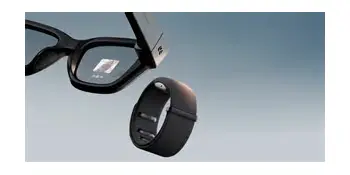
The Meta Ray Ban Display is a wearable display—glasses that overlay digital information on the wearer’s field of view while also functioning as conventional sunglasses. The product is targeted at users who want glanceable notifications, hands-free navigation, and lightweight AR experiences without carrying a secondary device. It suits urban commuters, field workers who need reference overlays, and enthusiasts exploring a less obtrusive approach to augmented content.
Discover deals on Laptops & Computers — updated daily.
Shop Amazon →Design and fit
Comfort and fit were top priorities in the test environment. The Meta Ray Ban Display mimics familiar sunglasses styling, which lowers the social barrier to wearing an always-on display. The glasses are lightweight and balanced, making them tolerable for hours of wear in short bursts. Nose fit and ear temple comfort varied between testers, which is typical for eyewear—try-on remains essential.
Display quality and interaction
The wearable uses a small but crisp optical module to present text, simple graphics, and navigation cues. It is not intended for immersive, full-scene AR or extended reading; rather, it excels at glanceable content. Brightness and contrast are adequate for most daylight conditions, but direct sunlight can reduce legibility for complex visuals. Interaction is primarily through taps/swipes on the frame, voice commands, or companion-device gestures—input methods that favor quick actions and short interactions.
Audio, camera and privacy
Audio uses open-ear speakers that keep the user aware of environmental sounds, which is safer in traffic but less private in noisy environments. The integrated camera enables hands-free photos and short clips. Privacy is an important consideration: the presence of a front-facing camera raises social and legal questions depending on jurisdiction, and buyers often care about visual indicators that show when recording is active.
Battery life and connectivity
Battery life is optimized for intermittent use—glanceable notifications, navigation sessions, quick media glimpses. Continuous camera use or prolonged streaming will drastically reduce run-time. The glasses depend heavily on a connected phone for many functions; the on-headset compute is limited compared with a laptop. Wireless reliability and companion app responsiveness were generally solid during testing.
Real-world use cases
- Navigation while cycling or walking without looking down at a phone.
- Hands-free reference for technicians or field workers who need step-by-step overlays.
- Quick contextual notifications and calendar reminders while commuting.
- Casual photography and short social-media clips without pulling out a phone.
Pros & Cons
- Pros: Natural sunglasses aesthetic; excellent for glanceable information; hands-free navigation and notifications; lighter and more portable than any laptop.
- Cons: Limited display area and input methods; not a replacement for sustained productivity tasks; battery and camera use are constrained; social and privacy concerns remain.
Side-by-side comparison
| Aspect | Intel In 2025 Year In | Meta Ray Ban Display |
|---|---|---|
| Form factor | Clamshell laptop—portable workstation | Wearable sunglasses with an embedded display |
| Primary use | Productivity, content creation, multitasking | Glanceable AR, navigation, hands-free notifications |
| Display | Large, color-accurate laptop screen suitable for long sessions | Small optical module—best for short reads and overlays |
| Input | Keyboard, trackpad, external peripherals | Taps/gestures on frame, voice, companion app |
| Battery profile | All-day for typical office use; reduced with heavy AI workloads | Optimized for intermittent use; drains quickly under continuous camera use |
| Mobility | Portable but larger than wearables; suited for sit-down and on-the-go balance | Ultra-mobile—worn on the face, always available |
| Audio & camera | Integrated mics/speakers for calls; laptop webcam | Open-ear audio; onboard camera for photos and short clips |
| Privacy & social acceptability | Standard laptop privacy considerations; visible usage is socially familiar | Mixed: socially familiar as sunglasses but camera presence can prompt concern |
| Software ecosystem | Full PC ecosystem; wide app compatibility | Companion apps and limited AR experiences; dependent on phone ecosystem |
| Best for | Workers and creators who need a full computing environment | Users who want hands-free glanceable information and lightweight AR |
Buying guide: What to consider before choosing
Choosing between a modern laptop like the Intel In and a wearable like the Meta Ray Ban Display comes down to how the device will be used most of the time. The following checklist helps prioritize the factors most buyers care about.

1. Primary use-case
If the majority of tasks involve document editing, spreadsheets, video editing, or extended web browsing, a laptop is the default choice. If the main goal is hands-free navigation, quick notifications, or occasional hands-free photo capture, a wearable display may be the better companion device.
2. Portability vs. capability
Wearables win on portability and always-on convenience. Laptops win on capability and long-form productivity. Consider whether being able to do complex work on the go matters more than always having glanceable context.
3. Battery life expectations
Inspect typical battery performance under scenarios you care about. Buyers who need full-day untethered productivity should favor laptops with conservative power profiles. Buyers who expect intermittent, short interactions can accept wearables’ more constrained runtimes.
Looking for the best Laptops & Computers deals on Amazon?
See Deals →4. Comfort and ergonomics
Try wearables on whenever possible: fit and comfort vary significantly between face shapes. For laptops, check keyboard travel, hinge stability, and weight distribution if long typing sessions are anticipated.
5. Privacy and social context
Wearables change social dynamics; the presence of cameras or always-on displays may not be appropriate in all settings. Buyers should confirm device indicators, recording lights, and local laws around recording in public spaces.
6. Ecosystem and compatibility
What phone or cloud services does the wearable require? Does the laptop support the preferred suite of productivity apps? Buyers should ensure the device integrates with existing workflows rather than requiring disruptive platform shifts.
7. Future-proofing and support
Consider software update cadence and repairability. A laptop’s longer productive life can be extended through software and occasional hardware upgrades; wearables evolve fast and may become functionally obsolete sooner as AR ecosystems mature.
Checklist for decisive buyers
- List the top three tasks the device must excel at (e.g., video editing, navigation, frequent calls).
- Decide whether the device must be the primary computing device or a complementary accessory.
- Assess how often the device will be used away from power and whether battery endurance meets that pattern.
- Confirm fit (for wearables) and keyboard comfort (for laptops) in person if possible.
- Research the software ecosystem and confirm compatibility with critical apps and services.
Which one is "better"?
Answering whether the Intel In 2025 Year In is better than the Meta Ray Ban Display requires clarifying the metric for "better." The review team found that:
- For traditional productivity, content creation, and multitasking, the Intel In 2025 Year In is the superior choice. It provides the screen real estate, input methods, and application compatibility needed for those workflows.
- For always-available glanceable information, hands-free navigation, and lightweight AR overlays, the Meta Ray Ban Display fills a role that a laptop cannot—convenience and unobtrusive presence while on the move.
- If the buyer’s budget and lifestyle permit, both products can be complementary: the laptop as a home or travel workstation, and the wearable as a mobility-first accessory for quick interactions.
Conclusion
Ultimately, the Intel In 2025 Year In and the Meta Ray Ban Display answer different user needs. The laptop remains the go-to device for deep work, content creation, and the broad app ecosystem that professionals and students rely on. The wearable shines in contexts where hands-free access to information and minimal friction are paramount. Buyers should choose by aligning the device to the primary day-to-day tasks they need to accomplish: for concentrated productivity, opt for the Intel In; for seamless, glanceable context while moving through the world, consider the Meta Ray Ban Display. When the use case is mixed, pairing a capable laptop with a well-designed wearable often provides the best of both worlds.