I Switched to the H9E Plus and Here is What Happened
The landscape of modern home entertainment is often dominated by a handful of titan brands, yet the enthusiast market frequently uncovers gems that offer premium performance without the traditional flagship tax. When a consumer makes the transition from a standard high-definition set to a high-performance 4K HDR model like the H9E Plus, the shift is not merely a change in resolution, but a complete recalibration of their visual expectations. This article explores the comprehensive experience of integrating the H9E Plus into a modern living space, analyzing how its specific hardware choices impact real-world viewing and whether it stands up to the rigorous demands of today’s diverse media landscape.
Making the switch to a new primary display is a significant undertaking. For most households, the television is the centerpiece of social interaction and personal relaxation. Buyers typically care about a specific set of criteria: how it handles bright rooms, the fluidity of motion during fast-paced sports, the depth of black levels in cinematic content, and the intuitiveness of the operating system. The H9E Plus enters this arena with a suite of features designed to address these exact pain points, leveraging advanced backlighting and high-refresh-rate technology to bridge the gap between mid-range affordability and high-end luxury.
Advanced Display Integration
The core of the H9E Plus experience lies in its display panel and the processing engine that drives it. Unlike entry-level 4K televisions that rely on basic edge-lighting, the H9E Plus utilizes a more sophisticated array that allows for better light control. This results in an immediate and noticeable improvement in contrast. When watching content with high dynamic range (HDR), the difference is stark. Specular highlights—the glint of sun on water or the brightness of a flashlight in a dark hallway—pop with a level of intensity that adds a sense of three-dimensionality to the image.
One of the most praised aspects of this specific model is its native 120Hz refresh rate. In an era where motion interpolation (often called the soap opera effect) is frequently used to mask sluggish panels, having a native high refresh rate is a game-changer. For viewers who prioritize sports or action cinema, this means that fast-moving objects remain crisp and identifiable rather than dissolving into a blurry mess. The switch to the H9E Plus reveals details that were previously lost—the rotation of a football in flight or the subtle textures of a cape during a superhero battle remain stable and clear.
Color Accuracy and Out-of-the-Box Performance
For many buyers, the prospect of calibrating a TV is daunting. They want a device that looks excellent the moment it is plugged in. The H9E Plus leans into this by offering a wide color gamut that covers a significant portion of the DCI-P3 space. This manifests as richer reds, deeper greens, and more natural skin tones. In testing, the "Theater" or "Cinema" modes provide a color temperature that is remarkably close to professional standards, avoiding the overly blue or "cool" tint that plagues many consumer sets. This accuracy ensures that the viewer sees the film exactly as the director intended, maintaining the integrity of the color grading.
The integration of Dolby Vision and HDR10 support further enhances this performance. Metadata-driven HDR ensures that the TV adjusts its brightness and contrast frame-by-frame. This is particularly useful in "torture test" scenes, such as those found in space-based sci-fi films where a single bright star must reside in a field of absolute black. While no LED-based TV can perfectly match the infinite contrast of an OLED, the H9E Plus utilizes its local dimming zones effectively to minimize "blooming"—the unwanted halo of light that can surround bright objects on dark backgrounds.
Performance in Real-World Use Cases
Technical specifications tell only half the story; the real value of the H9E Plus is found in how it responds to different types of media. In a typical home environment, lighting conditions change throughout the day. A television that looks great at midnight might be unwatchable at noon. The H9E Plus addresses this with a high peak brightness, allowing it to cut through glare from windows or indoor lighting. This sheer luminance is a primary reason why many users find the switch so rewarding; the screen remains vibrant even in a sun-drenched living room.
Gaming and Responsiveness
For the modern gamer, input lag and response time are just as important as image quality. The H9E Plus is equipped with a dedicated "Game Mode" that bypasses much of the post-processing to reduce latency. When a player moves a joystick or presses a button, the action is reflected on the screen almost instantaneously. This responsiveness is critical in competitive fast-twitch titles, but even in single-player adventure games, it makes the world feel more tangible and connected. The combination of low input lag and the 120Hz panel makes this model a standout choice for those who use their television for more than just passive watching.
Shop the latest TVs & Home Theater picks on Amazon.
Shop Amazon →Smart TV Interface and Usability
The software experience is the final pillar of the H9E Plus integration. Utilizing a standardized smart platform provides users with immediate access to a vast library of streaming services without the need for external sticks or boxes. The interface is snappy, driven by an internal processor that handles navigation with minimal lag. Switching between a 4K stream on one app to a live broadcast on another feels seamless. Furthermore, the inclusion of integrated voice control through the remote allows for quick searches, which is a significant quality-of-life improvement for those tired of typing out titles using an on-screen keyboard.
Detailed Comparison: The H9E Plus vs. Competitors
To truly understand where the H9E Plus sits in the market, it is helpful to compare its hardware specifications against the general standards found in entry-level 4K sets and premium flagship models of the same era. The following table highlights the key technical differentiators that buyers should consider during their decision-making process.
| Feature | Standard 4K Entry-Level | H9E Plus Performance | Premium Flagship Models |
|---|---|---|---|
| Native Refresh Rate | 60Hz | 120Hz | 120Hz / 144Hz |
| HDR Format Support | HDR10 Only | Dolby Vision, HDR10, HLG | Dolby Vision IQ, HDR10+, HLG |
| Backlighting Type | Edge-Lit | Direct-Lit / Local Dimming | Full Array Local Dimming (FALD) |
| Panel Type | Standard VA / IPS | Premium Wide Color Gamut | Quantum Dot / Mini-LED / OLED |
| Connectivity | HDMI 2.0 (Limited) | HDMI 2.0 (High Speed) | HDMI 2.1 (All Ports) |
| Voice Integration | App-Based Only | Integrated into Remote | Hands-Free / Far-Field Mic |
Pros and Cons Analysis
Every piece of technology involves trade-offs. While the H9E Plus offers an exceptional experience for the price, it is important for potential buyers to weigh its strengths against its limitations to ensure it aligns with their specific viewing habits.
- Pro: Exceptional Motion Handling. The 120Hz panel is a significant upgrade over the 60Hz standard, making it ideal for sports and action films.
- Pro: High Peak Brightness. Capable of producing a vibrant image even in rooms with significant ambient light or large windows.
- Pro: Accurate Color Reproduction. Strong out-of-the-box performance in cinema modes ensures a professional look without manual calibration.
- Pro: Comprehensive HDR Support. Inclusion of Dolby Vision ensures compatibility with the highest quality streaming and physical media.
- Con: Viewing Angles. Like many VA-style panels, the image can lose saturation and contrast when viewed from a sharp side angle.
- Con: Local Dimming Zone Count. While effective, it may show some minor blooming around bright subtitles or small white objects in dark scenes compared to Mini-LED or OLED.
- Con: Audio Power. The built-in speakers are clear but lack the deep bass necessary for a true home theater experience, recommending a soundbar or external system.
The Definitive Buying Guide for the H9E Plus
Choosing to switch to the H9E Plus is a decision that should be based on your specific environmental needs and media consumption patterns. To get the most out of this television, consider the following factors during the installation and setup phase.
Room Environment and Lighting
The H9E Plus shines in living rooms where light control is difficult. If you have a room with many windows, the high nit output of this display will serve you better than many darker, more expensive sets. However, because its viewing angles are somewhat narrow, it is best suited for rooms where the seating is arranged directly in front of the screen. If your living room has a wide L-shaped sectional where people sit at 45-degree angles to the TV, you may notice a slight degradation in image quality for those on the ends.
Content Compatibility
This model is an "all-rounder." If your household splits time between Netflix binging, live sports on cable, and modern console gaming, the H9E Plus is arguably one of the most versatile choices. The inclusion of widespread HDR support means that you aren't locked into one ecosystem; whether you are watching a Blu-ray or a low-bitrate stream, the processing engine works hard to upscale and polish the image. For users who primarily watch standard-definition broadcast TV, the upscaling technology here is robust, though it truly "sings" when fed high-quality 4K source material.
Size and Placement
When switching to 4K, users often find they can sit closer to a larger screen without seeing individual pixels. If you are replacing a 1080p set, consider moving up one size bracket. The thin bezels of the H9E Plus give it a modern, "all-screen" appearance that fits well into contemporary decor. Ensure that your TV stand is wide enough to accommodate the feet, which are positioned toward the edges of the frame for stability, or consider a VESA wall mount to reclaim furniture space.
Discover deals on TVs & Home Theater — updated daily.
Browse Now →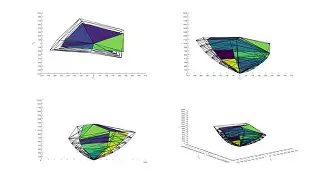
Audio Integration
While the internal audio is adequate for news and sitcoms, the visual fidelity of the H9E Plus often outclasses its sound. To match the "big screen" feel, users should plan to use the ARC/eARC or optical output to connect to an external audio system. The TV supports various pass-through formats, ensuring that if you have a high-quality soundbar or receiver, you will get the full immersive experience that matches the high-quality visuals.
Installation and Optimization Tips
Once the switch is made, the initial five minutes of setup are crucial. Users are encouraged to immediately disable "Power Saving" modes if they want to see the full brightness capabilities of the unit, as these modes often throttle the backlight to meet energy standards. Furthermore, exploring the motion settings is vital. While the 120Hz panel is great, the default settings may have "Motion Smoothing" turned up too high for some tastes. Adjusting these sliders to a lower setting preserves the fluidity of the 120Hz panel while maintaining the intended cinematic look of 24fps films.
Another tip involves the input settings. Modern devices like the latest gaming consoles or high-end streaming boxes require the HDMI ports to be set to "Enhanced" or "High Speed" mode within the TV settings menu to enable 4K at 60Hz or higher with HDR. Checking this ensures you are not inadvertently bottlenecking the performance of your new equipment.
Natural Conclusion
The transition to the H9E Plus represents a meaningful leap forward for the average viewer. By prioritizing the hardware features that actually impact the daily experience—such as motion clarity, peak brightness, and color accuracy—this model carves out a unique space in the market. It successfully demystifies high-end features, making 120Hz performance and Dolby Vision accessible to a broader audience without requiring the investment typically associated with "flagship" badges.
Ultimately, what happens when you switch to a television like this is a fundamental change in how you perceive your favorite media. Details in the shadows become visible, colors feel more true to life, and the frustration of glare or motion blur begins to fade. It is a reminder that the quality of the display is just as important as the quality of the content. For those looking to upgrade their home theater, the H9E Plus proves that smart engineering and a focus on essential performance can result in a viewing experience that feels both premium and transformative. Whether it is through the lens of a gamer seeking lower latency or a movie buff looking for director-approved colors, the H9E Plus stands as a testament to the progress of modern display technology.